Regulatory Oversight Shaping RNG Fairness in British Virtual Wheel Simulations
Bianca Schmitz · Aug 25, 2026

Regulatory Oversight Shaping RNG Fairness in British Virtual Wheel Simulations
Regulatory frameworks across Britain have developed structured approaches to RNG certification that focus on verifiable randomness in virtual wheel simulations used for online roulette variants, and these measures require operators to submit their systems for independent evaluation before deployment. Data from industry reports indicate that such oversight includes periodic audits, statistical analysis of output sequences, and compliance with technical standards that address sequence unpredictability along with long-term distribution uniformity. Observers note that these processes operate through third-party testing laboratories accredited by relevant authorities, which apply mathematical models to confirm that each simulated outcome meets predefined fairness thresholds without predictable patterns emerging over extended play periods.
Core Components of RNG Certification Protocols
Certification protocols typically examine the underlying algorithms that generate virtual wheel results, while also assessing hardware entropy sources or software-based pseudo-random generators that feed into the simulation engine, and this dual-layer review ensures both initial randomness quality and ongoing stability under operational loads. Studies from academic institutions have shown that regulators mandate minimum sample sizes for statistical testing, often exceeding millions of simulated spins, so that chi-square and serial correlation tests can detect any deviation from expected uniform distribution across numbered pockets. In August 2026 several updated technical guidelines took effect that introduced enhanced requirements for real-time monitoring interfaces, allowing continuous data feeds from live simulations to flag anomalies as they occur rather than relying solely on retrospective reviews.
Independent Testing and Laboratory Standards
Accredited laboratories conduct evaluations that encompass source code inspection alongside live output verification, and they issue reports that operators must present during licensing renewals or when introducing new virtual wheel variants. Those who have examined certification records find that laboratories apply international testing standards adapted for British contexts, which include requirements for seed management, algorithm reseeding intervals, and resistance to external manipulation attempts. One study revealed that such layered verification reduces the probability of exploitable biases by enforcing entropy thresholds that exceed basic computational randomness benchmarks, while operators integrate these controls into their platform architectures before public release.
Statistical Monitoring and Compliance Reporting
Operators maintain internal logging systems that capture detailed spin data for regulatory submission, and these records undergo automated analysis to confirm adherence to fairness metrics such as return-to-player percentages derived from RNG outputs. Research indicates that compliance dashboards present aggregated statistics covering thousands of game sessions, enabling authorities to identify any drift in distribution patterns across different timeframes or player volumes. What's interesting is how these reporting mechanisms connect directly to penalty structures, where repeated deviations trigger mandatory algorithm reviews or temporary suspension of affected simulations until corrective measures restore compliance.
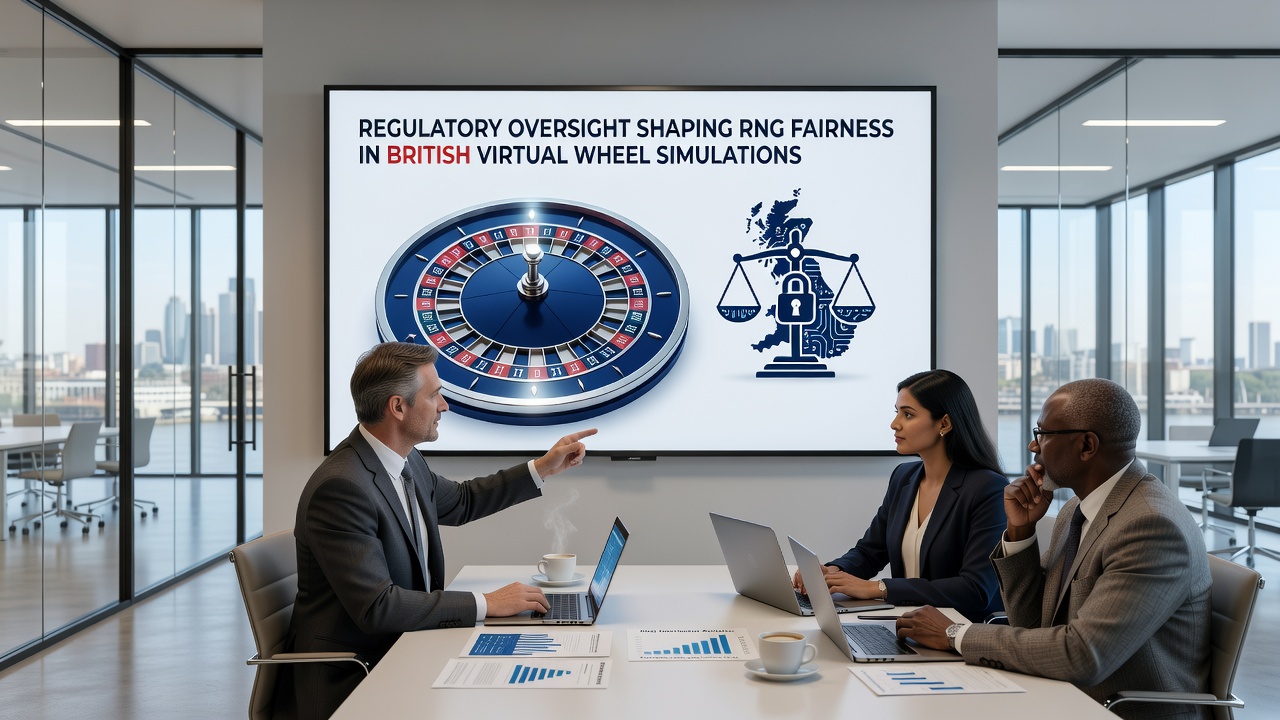
European regulatory bodies have published comparative studies on RNG oversight models that highlight similarities between British practices and those implemented in other jurisdictions, and these documents provide operators with benchmarks for aligning their systems with evolving technical expectations. According to figures from the European Gaming and Betting Association, certified RNG systems demonstrate consistent uniformity rates above 99.9 percent when subjected to standard test batteries, which supports the effectiveness of current certification cycles. Additional oversight extends to player-facing interfaces that display certified fairness seals, allowing users to verify that the virtual wheel they engage with carries current regulatory approval.
Recent Developments in Oversight Mechanisms
By August 2026 regulatory updates had incorporated machine learning tools into audit processes, enabling faster identification of subtle anomalies that traditional statistical methods might overlook during initial certification phases. Data shows these tools analyze historical spin datasets from multiple operators simultaneously, creating cross-platform benchmarks that strengthen individual compliance evaluations without increasing manual review workloads. Observers note that this integration reflects broader trends toward automated regulatory technology while preserving human oversight for final determinations on any flagged irregularities.
Industry reports further detail how British frameworks require RNG providers to maintain version control documentation that tracks all algorithm modifications, ensuring that even minor updates receive fresh certification before deployment in live environments. Those who've studied implementation timelines find that the average approval period for a new virtual wheel simulation spans several weeks, during which laboratories perform both static code reviews and dynamic runtime testing under simulated high-traffic conditions. Such thoroughness addresses potential interactions between RNG outputs and game logic that could inadvertently affect outcome fairness.
Conclusion
Regulatory oversight continues to evolve through iterative refinements that balance technical rigor with operational practicality, and the result is a system where RNG fairness in British virtual wheel simulations rests on documented, repeatable verification processes. Evidence from multiple testing cycles demonstrates that these controls maintain distribution integrity across extensive operational periods, while ongoing updates like those implemented in August 2026 extend monitoring capabilities into real-time domains. Operators and testing laboratories work within these parameters to deliver simulations that meet established statistical standards, creating a structured environment where fairness verification occurs through consistent application of accredited protocols and reporting requirements.