Wheel Bias Patterns and Their Role in Outcome Distribution Across Regulated UK Casino Spins
Drew Schmid · Aug 23, 2026

Wheel Bias Patterns and Their Role in Outcome Distribution Across Regulated UK Casino Spins
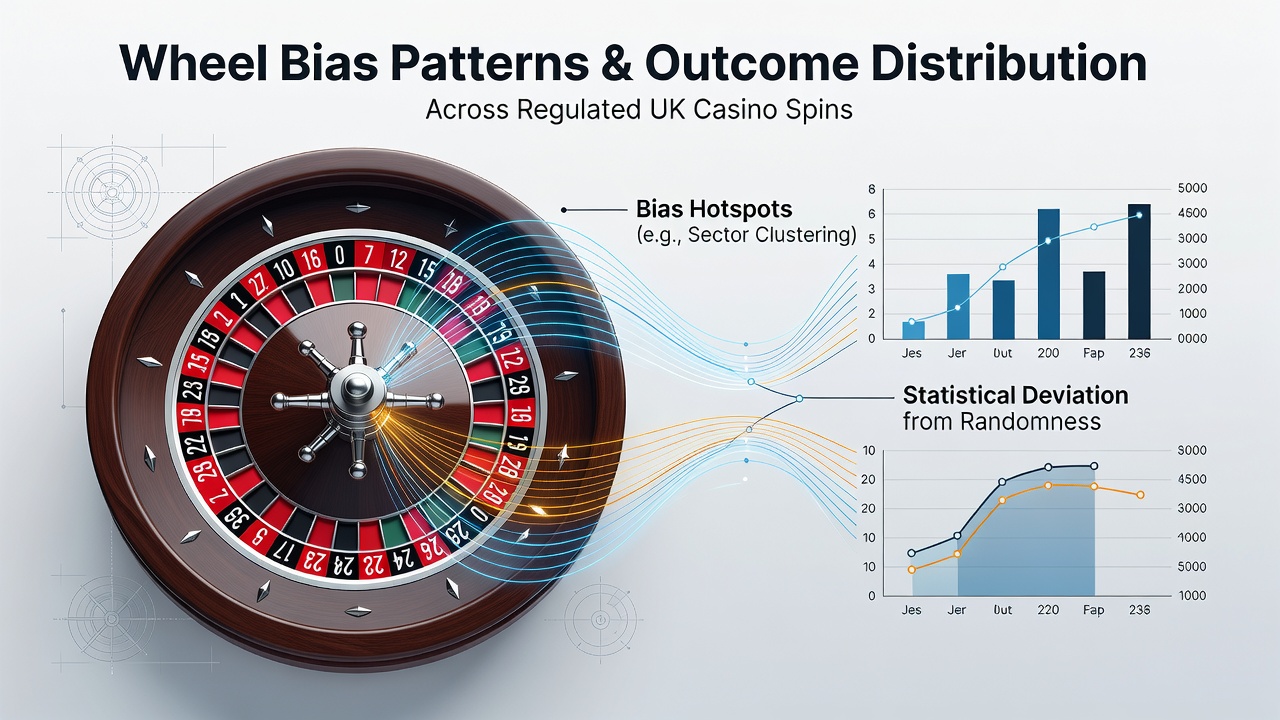
Wheel bias patterns emerge when physical roulette wheels develop mechanical inconsistencies that alter how often certain numbers appear during spins, and these patterns influence outcome distribution in regulated UK casino environments where physical equipment undergoes regular inspection. Observers note that factors like wheelhead tilt, pocket divider wear, and rotor imbalance create predictable deviations from uniform probability, while data from multiple testing cycles demonstrates that such biases concentrate outcomes around specific sectors rather than spreading evenly across all 37 pockets on a standard European wheel.
Mechanical Origins of Bias in Physical Wheels
Manufacturing tolerances and ongoing use introduce subtle defects that shift ball behavior, and experts track these changes through repeated spin records that reveal clustering around particular numbers or wheel sections. Research indicates that even minor deformations in the ball track or frets can direct the ball toward favored landing zones, whereas balanced wheels maintain closer alignment with theoretical distributions. Those who've studied casino equipment maintenance records find that bias often develops gradually after thousands of spins, and patterns become measurable once deviation exceeds statistical thresholds set by oversight protocols.
Detection Techniques Used in Regulated Settings
Casino operators and independent testers apply statistical analysis to spin logs collected over extended periods, and they compare observed frequencies against expected random outcomes to identify anomalies. Studies show that software tools flag sectors where hit rates rise beyond normal variance, while manual inspections examine wheel components for visible damage or misalignment. In August 2026 monitoring updates across several jurisdictions highlighted continued reliance on combined electronic sensors and human verification to catch emerging bias before it affects large volumes of play.
Impact on Outcome Distribution Patterns
Bias alters the probability landscape so that certain numbers receive disproportionate results, and this concentration changes payout expectations for players who track historical data. Figures reveal that a wheel with a documented 2 percent bias toward one dozen can shift long-term distribution enough to appear in aggregated results from regulated floors, although daily fluctuations still mask the effect for short sessions. Observers note that distribution shifts remain consistent only while the mechanical condition persists, and recalibration or part replacement typically restores closer adherence to uniform patterns.
Regulatory Approaches Across Different Jurisdictions
Agencies outside the UK apply varied standards for wheel certification and ongoing audits, and reports from the Nevada Gaming Control Board detail mandatory bias testing intervals that require operators to document deviation limits. Canadian provincial regulators similarly mandate periodic wheel profiling using independent labs, and data compiled through 2026 shows alignment between these frameworks and European practices that emphasize equipment integrity over time. Those who review cross-border compliance summaries find that shared testing methodologies help standardize how bias gets quantified, although local thresholds for acceptable variance differ slightly by region.
Case Examples from Documented Testing
One documented instance involved a wheel that developed a persistent bias toward the 0 pocket after extended use, and analysis of over 50,000 spins confirmed elevated frequency that exceeded normal variance. Technicians traced the issue to a slight rotor wobble, and replacement of the affected component returned distribution to expected levels. Another example tracked gradual pocket divider erosion that favored numbers in a particular arc, and records indicated the pattern emerged after approximately 80,000 spins before detection protocols flagged it for corrective action.
Statistical Methods for Measuring Bias
Researchers apply chi-square tests and standard deviation calculations to spin datasets, and these methods distinguish genuine mechanical bias from random short-term variation. Evidence suggests that sample sizes below several thousand spins often fail to reveal subtle patterns, whereas larger collections expose consistent deviations when they exist. Observers note that software platforms used in regulated casinos automate much of this analysis, yet human review remains essential to interpret borderline results and confirm physical causes.
Conclusion
Wheel bias patterns continue to shape outcome distribution in regulated UK casino spins through mechanical factors that testing regimes monitor and correct, and ongoing data collection through August 2026 and beyond supports consistent application of statistical controls across jurisdictions. Reports from sources such as the Responsible Gambling Council reinforce the value of equipment verification in maintaining outcome integrity, while documented cases illustrate how detection and remediation keep deviations within acceptable bounds.